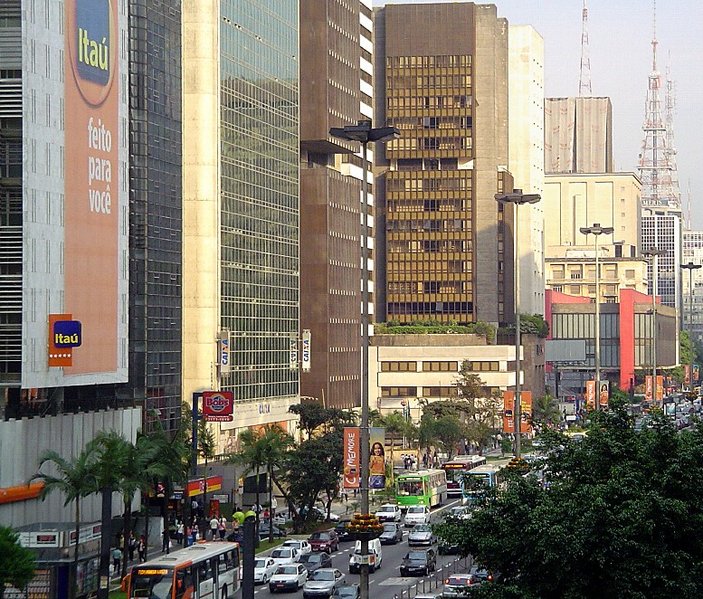
 Paulista Avenue - Photo by Caio do Valle
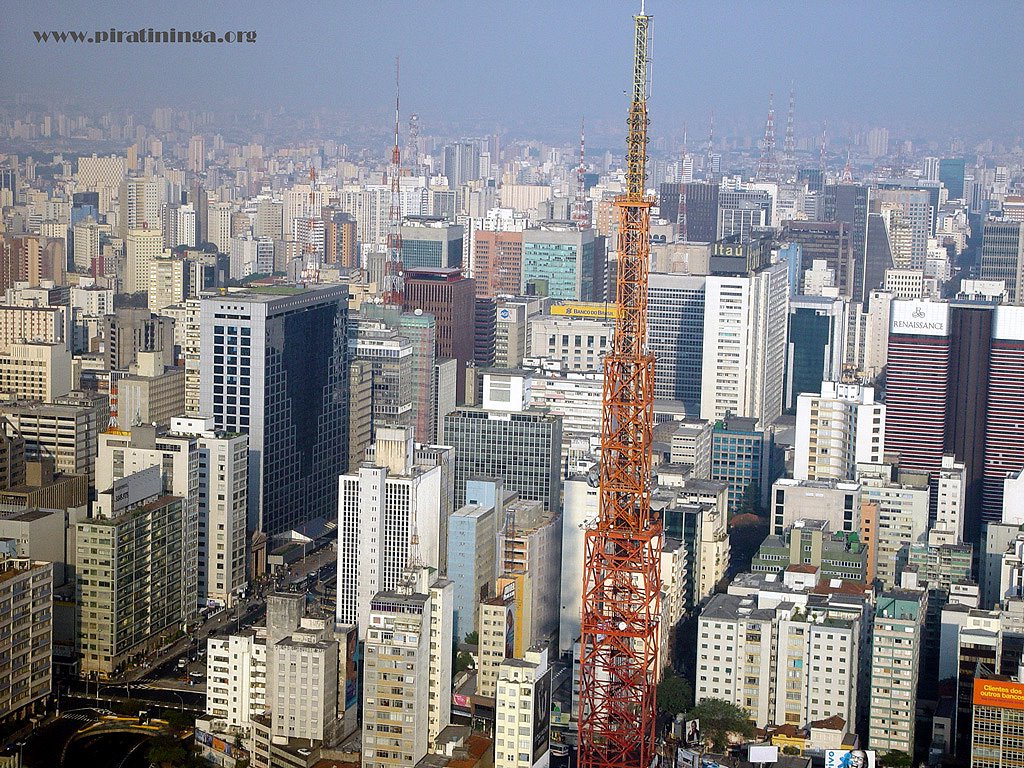 Paulista Avenue Region - Photo by Jorge Eduardo Rubies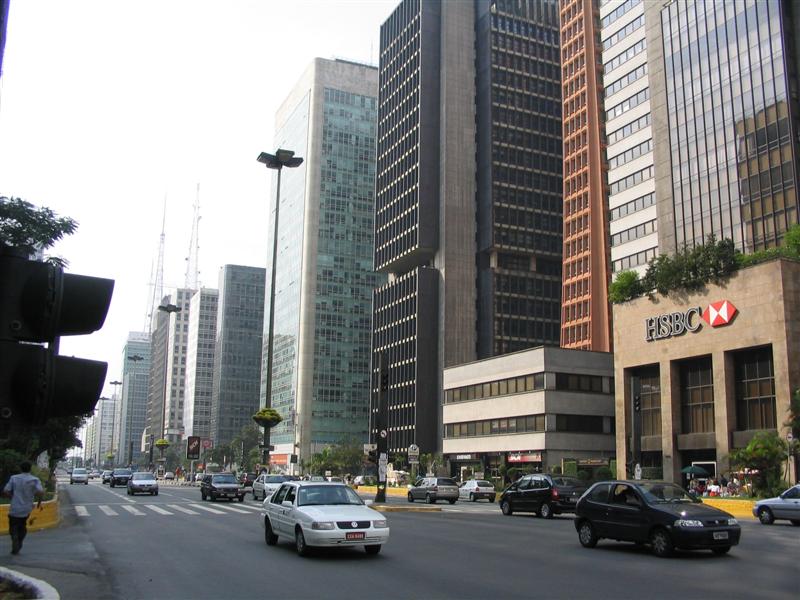
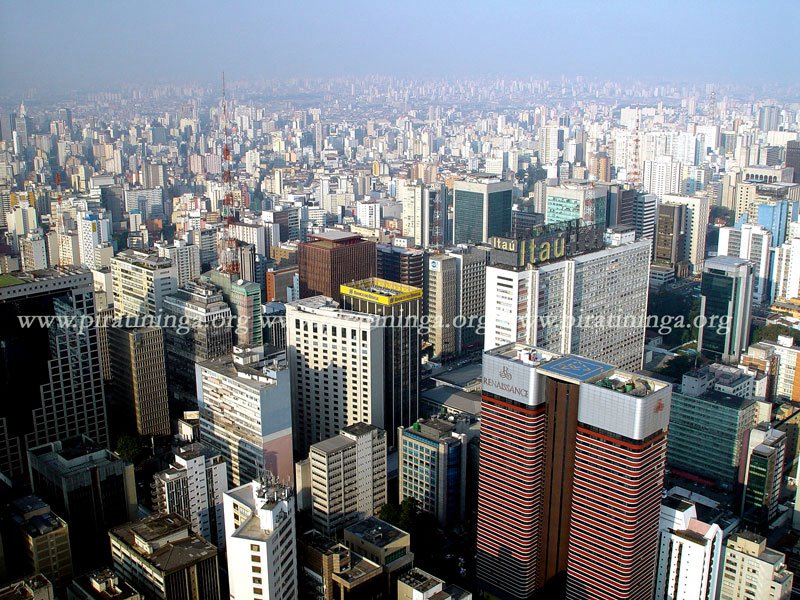 Paulista Avenue Region - Photo by Jorge Eduardo Rubies
Museum of Arte of São Paulo - Photo by www.iuav.it/homepage/
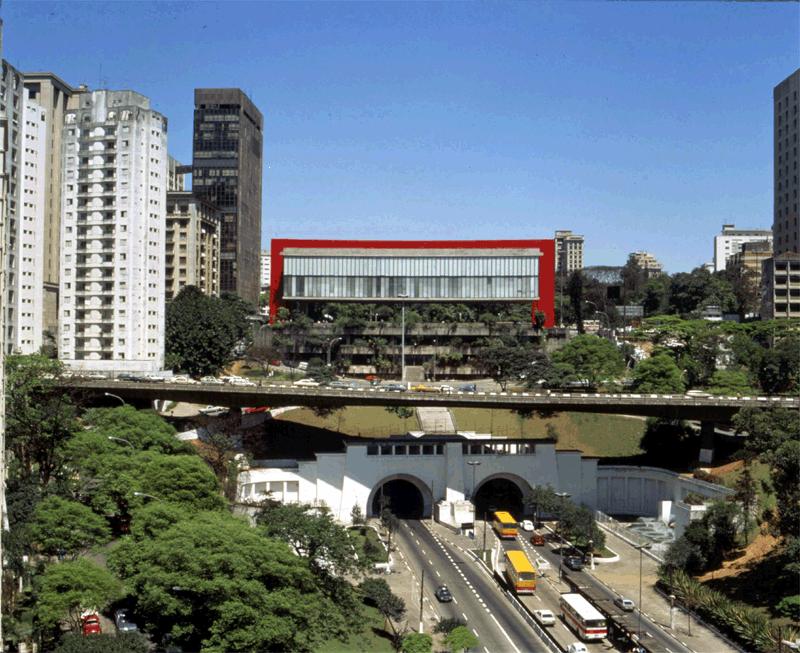 Museum of Art of São Paulo - Photo by www.iuav.it/homepage/
 Museum of Art of São Paulo (MASP) designed by Lina Bo Bardi in the 50s.
Photo by http://www.fotosedm.hpg.ig.com.br/
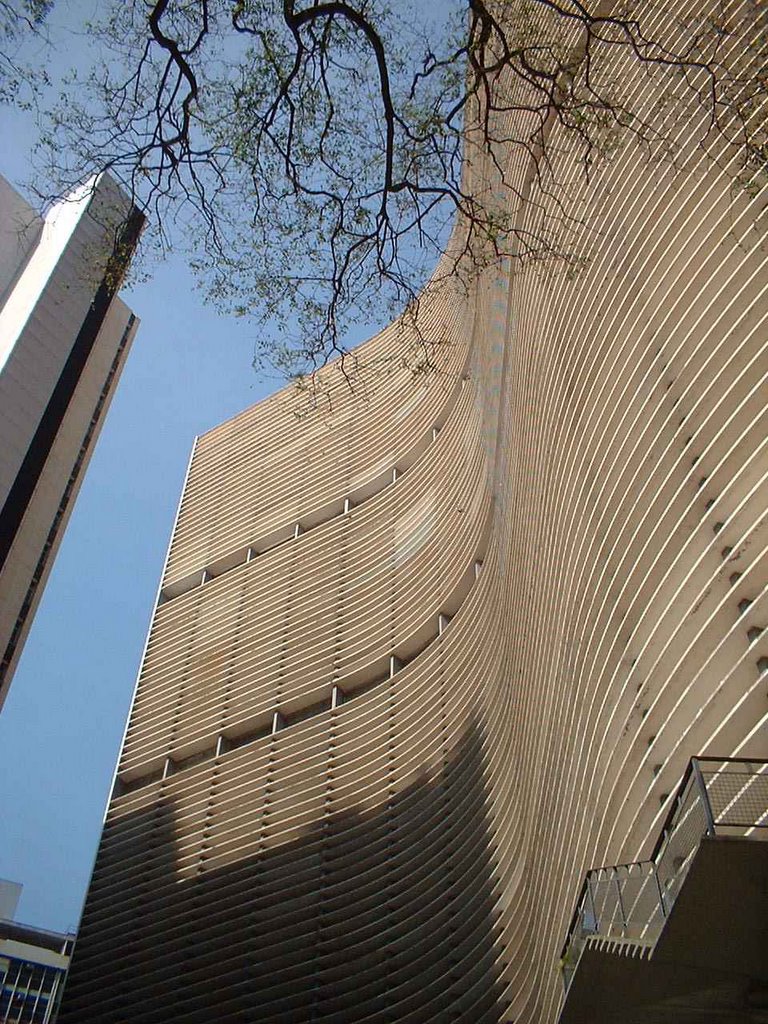
The "S" shaped building is one of Niemeyer's buildings named Edifício Copan. About five thousand people living in this building. Oscar Niemeyer (1907-) is the most famous Brazilian architect wich among many other things designed the whole Brasilia town, capital of the country since 1960.
Photo by http://bbs.keyhoke.com/
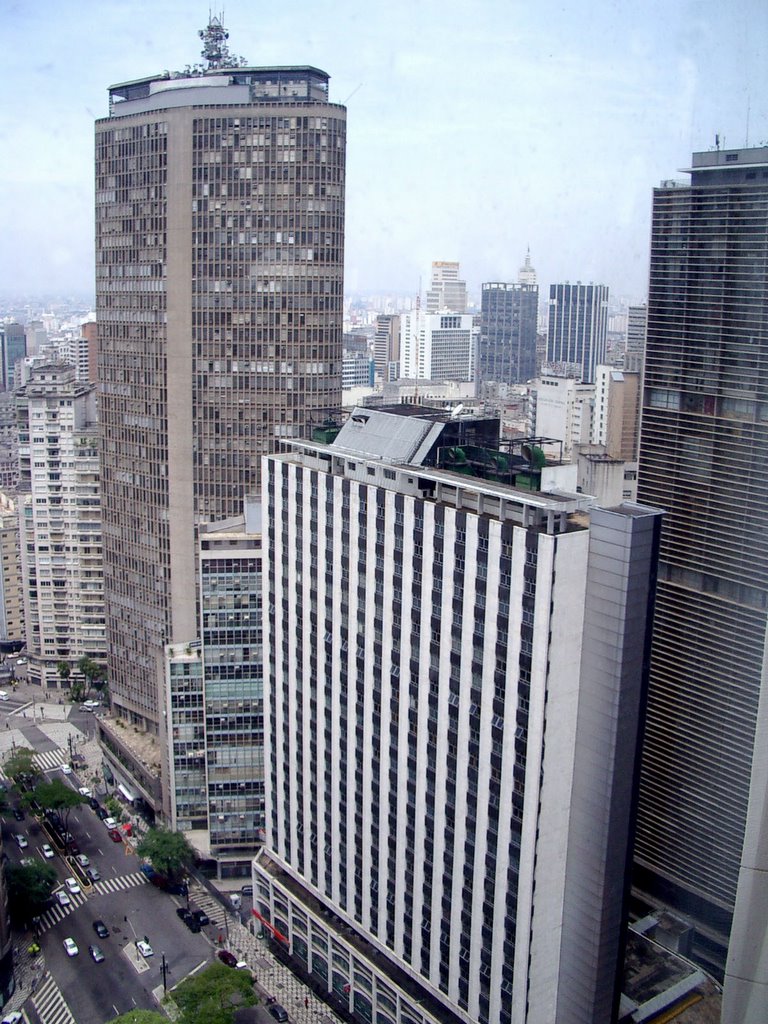 Itália Building at Ipiranga Avenue
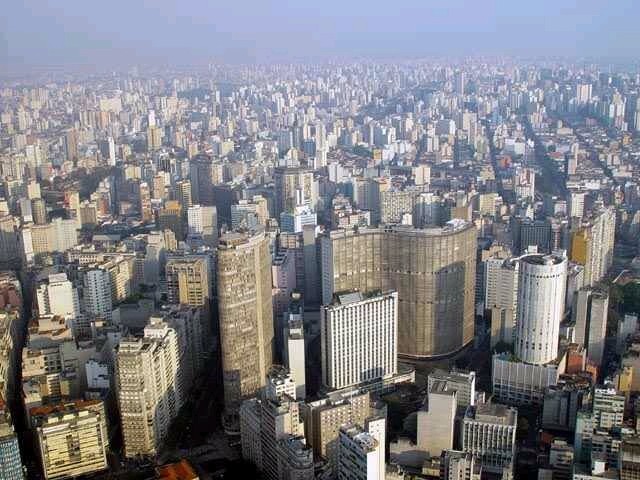 Itália Building, Copan Building and Hilton Hotel
Photo by http://www.fotosedm.hpg.ig.com.br/
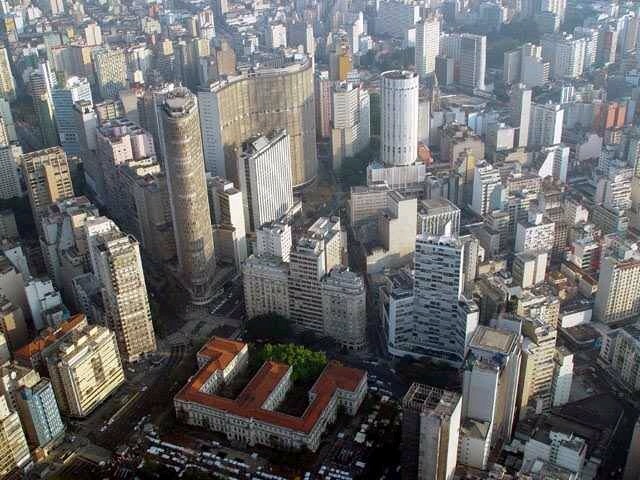
Caetano de Campos' School (I studied in this school)
Photo by http://www.fotosedm.hpg.ig.com.br/
 Anhangabaú Square - Photo by Gabriel Fernandes
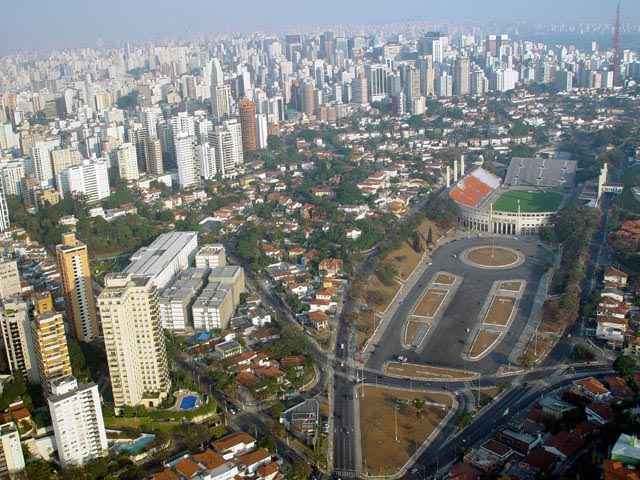 Pacaembú Neighborhood - Photo by www.fotosedm.hpg.ig.com.br
"When talking about the State of São Paulo, the superlative form is a must. It is the state with the country's largest population, largest industrial complex, highest economic production, the one that receives the largest number of immigrants and, as expected, the most cosmopolitan state in South America. The state of São Paulo has 645 municipalities and a population of approximately 40 million inhabitants. With the country's best infrastructure and a highly skilled labor force, São Paulo can be called "Brazil's locomotive". São Paulo is also the financial and industrial center of Brazil. Because of its economic and demographic weight, São Paulo has always played a pivotal role in Brazilian politics."
Founding: The city was founded on January 25, 1554, by Portuguese Jesuit missionaries José de Anchieta and Manoel da Nóbrega, who established a mission — the Colégio de São Paulo de Piratininga — to convert the Tupi-Guarani Native Brazilians to Catholic religion. Located just beyond the Serra do Mar cliffs overlooking the port city of Santos, and close to River Tietê, the new settlement became the natural entrance to the vast and fertile plateau that would eventually become the State of São Paulo.
São Paulo, the world's second-largest city. In accordance with City Mayors Statistics, "the city of Sao Paulo, that is the world’s second-largest city, has a population of just over 10 million people. If the whole metropolitan area is included, the figure reaches over 15 million. São Paulo is now Brazil's biggest city - and one of the world's biggest. It has large numbers of people of Italian, Spanish, German, Russian and Japanese descent. Most people in Brazil are Roman Catholic. In São Paulo one-third of the people follow other religions. The world’s largest city in terms of population (more than 10.2 million), is Seoul, the capital of South Korea. Three other cities, Bombay (India), Jakarta (Indonesia) and Karachi (Pakistan), have grown to more than nine million people".
São Paulo is an ultramodern metropolis. "The largest city of Brazil and of South America, São Paulo is an ultramodern metropolis with skyscrapers, palatial homes, and spacious parks and recreational facilities. Its tropical climate is moderated by the city's altitude (2,700 ft/6,823 m). São Paulo, which dominates the vast hinterland of one of Brazil's wealthiest agricultural states, is Brazil's commercial, financial, and industrial center. Through its Atlantic Ocean port of Santos, it ships the farm produce of the interior. São Paulo is the center of Brazil's automobile industry; other important manufactures are textiles, processed foods, metal products, electrical equipment, pharmaceuticals, chemicals, furniture, and computers. Printing and publishing are also important. Abundant hydroelectric power has spurred industrial growth. The city is a major road, rail, and air transportation hub and has a modern subway system."
The State of São Paulo, "especially the capital, offers countless cultural options that suit all tastes and pockets: from exhibitions and outdoor concerts to internationally known museums and theaters with their sophisticated events. São Paulo is home to important and diversified cultural programs, such as distinguished orchestras, operas, ballets, exhibitions and concerts from all over the world."